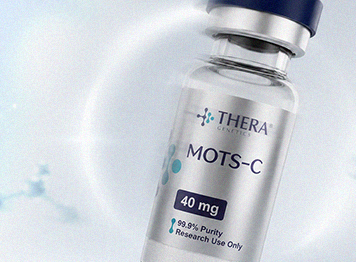
The relationship between metabolism, mitochondria, and sleep quality has been gaining increasing attention in scientific research. Now, a 2025 study published in Sleep and Biological Rhythms has added a new piece to this discussion: patients with obstructive sleep apnea (OSA) showed lower serum levels of the mitochondrial peptide MOTS-c, and this reduction appeared to correlate with disease severity.
This finding is particularly interesting because MOTS-c is a molecule associated with metabolic regulation, cellular stress responses, and mechanisms related to exercise and oxidative balance. These properties have led researchers to investigate its potential role in several conditions involving metabolic and mitochondrial dysfunction.
Obstructive sleep apnea is characterized by recurrent partial or complete obstruction of the upper airway during sleep.
What Happens in Obstructive Sleep Apnea?
These episodes interrupt normal breathing and consequently lead to periods of reduced blood oxygenation followed by reoxygenation. This phenomenon is known as intermittent hypoxia.
Repeated cycles of intermittent hypoxia may be associated with increased oxidative stress, inflammatory responses, and changes in mitochondrial function.
Among the tissues involved is the musculature of the upper airway, including muscles responsible for maintaining airway patency during sleep. The genioglossus, one of the main tongue muscles involved in maintaining airway openness, plays an important role in this context.
Therefore, OSA is not simply a mechanical condition. It also involves a complex interaction between oxygenation, metabolism, inflammation, oxidative stress, and muscle function.
Where Does MOTS-c Come In?
MOTS-c — short for Mitochondrial Open Reading Frame of the 12S rRNA-c — is a small peptide encoded by mitochondrial DNA.
Unlike many peptides studied in biomedical research, MOTS-c originates directly from the mitochondria, organelles that play a central role in energy production and cellular signaling.
Experimental research has linked MOTS-c to pathways such as AMPK and NRF2, which are involved in energy homeostasis and cellular antioxidant responses. Experimental evidence has also associated MOTS-c with mechanisms related to glucose uptake and skeletal muscle metabolism.
For these reasons, MOTS-c has emerged as a molecule of interest connecting metabolism, exercise, cellular stress, and mitochondrial function.
What Did the New Study Find?
The 2025 study by Luo and colleagues evaluated 77 participants: 53 individuals with obstructive sleep apnea and 24 healthy controls.
Among the participants with OSA, there were:
- 8 cases of mild apnea;
- 16 cases of moderate apnea;
- 29 cases of severe apnea;
- 24 individuals in the healthy control group.
The researchers measured serum MOTS-c concentrations and analyzed sleep-related parameters, including the apnea-hypopnea index (AHI) and oxygen desaturation index (ODI).
The main finding was an inverse relationship between serum MOTS-c levels and OSA severity: the more severe the OSA, the lower the observed MOTS-c concentrations.
MOTS-c levels were also associated with BMI, AHI, and ODI. Importantly, after BMI was taken into account in the statistical analysis, OSA severity remained independently associated with MOTS-c levels.
This is relevant because it suggests that the observed association cannot simply be explained by differences in body weight among the participants.
A Possible Link Between Mitochondria and Sleep Apnea
The finding does not mean that MOTS-c is currently a proven treatment for sleep apnea.
The 2025 study was observational: it identified an association between circulating MOTS-c levels and OSA severity, but it did not administer MOTS-c to patients to determine whether the molecule could treat or modify the disease.
Nevertheless, the finding raises an important research question:
Does reduced MOTS-c contribute to the pathophysiology of sleep apnea, or is it a consequence of the metabolic changes caused by the disease?
Answering this question will require experimental studies and, eventually, clinical trials.
The Role of Oxidative Stress
One of the reasons this hypothesis is particularly interesting lies in the biology of MOTS-c.
The intermittent hypoxia characteristic of OSA may increase oxidative stress and stimulate inflammatory processes. At the same time, experimental studies indicate that MOTS-c participates in cellular mechanisms involving AMPK and the NRF2-mediated antioxidant response.
This connection creates a biologically compelling hypothesis: a molecule involved in the body’s metabolic and antioxidant response could be associated with cellular processes underlying OSA.
But there is an important distinction between identifying a biological association and demonstrating a therapeutic effect.
That distinction is precisely what makes future research so important.
What About the Upper Airway Muscles?
Another area of interest is the relationship between muscle function and sleep apnea.
Orofacial myofunctional therapy has already been investigated as a complementary approach to OSA, particularly through exercises targeting the oropharyngeal musculature.
A Cochrane review found evidence that myofunctional therapy may reduce daytime sleepiness and improve certain sleep-related outcomes in adults, although the certainty of the evidence varies from moderate to very low depending on the outcome.
A more recent 2025 meta-analysis also evaluated randomized clinical trials and considered myofunctional therapy a potentially useful adjunctive approach, although uncertainty remains regarding its effects on the apnea-hypopnea index.
Within this context, MOTS-c becomes particularly interesting. Beyond its metabolic and antioxidant effects described in experimental studies, researchers may investigate whether its effects on skeletal muscle have any relevance to the musculature involved in maintaining airway patency.
What Still Needs to Be Discovered?
The 2025 study represents one piece of a much larger puzzle.
Further research is needed to determine:
- whether reduced MOTS-c levels contribute to the development of OSA or are a consequence of the disease;
- whether MOTS-c supplementation could modify apnea-related parameters;
- which cellular mechanisms may be involved;
- whether there is a causal relationship between MOTS-c, intermittent hypoxia, and mitochondrial dysfunction;
- and, most importantly, whether findings from experimental studies can be safely reproduced in humans.
A 2025 analysis published in Sleep and Biological Rhythms discussed the potential of MOTS-c as a research target in the pathophysiology of OSA, emphasizing that although the observed relationship is promising, it still requires further investigation.
The Next Step in Science
Interest in MOTS-c reflects an important shift in how researchers are approaching metabolic health and longevity.
Rather than studying each biological system in isolation, scientists are increasingly investigating how mitochondria, metabolism, inflammation, oxidative stress, muscle function, and cellular signaling interact.
In obstructive sleep apnea, this perspective may open new questions about the mechanisms connecting respiration, metabolism, and mitochondrial function.
MOTS-c is not yet a definitive answer for OSA.
But the discovery that circulating MOTS-c levels are associated with disease severity adds another molecule to the field of investigation — and another potential avenue for understanding how mitochondria respond to physiological stress.
This is how science moves forward: an association generates a hypothesis. A hypothesis drives new research. And new research can transform what is now a possibility into knowledge.
THERA Genetics
Science that delivers.
Applied excellence that transforms possibilities into reality.
Informational and educational content. It does not constitute medical advice, diagnosis, or prescription. The use of any substance or intervention should be evaluated by a qualified healthcare professional, taking into account the individual context and the available scientific evidence.
MOTS-c: o peptídeo mitocondrial que pode abrir uma nova frente de pesquisa na apneia do sono
A relação entre metabolismo, mitocôndrias e qualidade do sono vem ganhando cada vez mais espaço na pesquisa científica. Agora, um estudo publicado em 2025 na revista Sleep and Biological Rhythms trouxe um novo dado para essa discussão: pacientes com apneia obstrutiva do sono (AOS) apresentam níveis séricos reduzidos do peptídeo mitocondrial MOTS-c, e essa redução parece acompanhar a gravidade da doença.
O achado chama atenção porque o MOTS-c é uma molécula associada à regulação metabólica, resposta ao estresse celular e mecanismos relacionados ao exercício e ao equilíbrio oxidativo. A partir desses mecanismos, pesquisadores vêm investigando seu possível papel em diferentes condições relacionadas à disfunção metabólica e mitocondrial.
O que acontece na apneia obstrutiva do sono?
A apneia obstrutiva do sono é caracterizada por episódios recorrentes de obstrução parcial ou completa das vias aéreas superiores durante o sono.
Esses episódios provocam interrupções repetidas da respiração e, consequentemente, períodos de redução da oxigenação sanguínea seguidos de sua recuperação. Esse fenômeno é conhecido como hipóxia intermitente.
A repetição desses ciclos pode estar associada ao aumento do estresse oxidativo, alterações inflamatórias e alterações na função mitocondrial.
Entre os tecidos envolvidos está a musculatura das vias aéreas superiores, incluindo músculos responsáveis por manter a passagem de ar durante o sono. O genioglosso, um dos principais músculos da língua envolvidos na manutenção da permeabilidade das vias aéreas, tem papel importante nesse contexto.
Assim, a AOS não é apenas uma questão mecânica. Ela também está relacionada a uma complexa interação entre oxigenação, metabolismo, inflamação, estresse oxidativo e função muscular.
Onde entra o MOTS-c?
O MOTS-c — sigla para Mitochondrial Open Reading Frame of the 12S rRNA-c — é um pequeno peptídeo codificado pelo DNA mitocondrial.
Diferentemente de muitos peptídeos estudados pela ciência, o MOTS-c tem origem diretamente na mitocôndria, organela central para a produção de energia e para a sinalização metabólica celular.
Pesquisas experimentais associam o MOTS-c a vias como AMPK e NRF2, relacionadas à homeostase energética e às respostas antioxidantes celulares. Também existem evidências experimentais de interação com mecanismos ligados à captação de glicose e ao metabolismo do músculo esquelético.
Por isso, o MOTS-c vem sendo estudado como uma molécula capaz de conectar metabolismo, exercício, estresse celular e função mitocondrial.
O que o novo estudo encontrou?
O estudo publicado por Luo e colaboradores em 2025 avaliou 77 participantes: 53 pessoas com apneia obstrutiva do sono e 24 controles saudáveis.
Entre os participantes com AOS, havia:
- 8 casos de apneia leve;
- 16 casos de apneia moderada;
- 29 casos de apneia grave;
- 24 indivíduos no grupo controle.
Os pesquisadores mediram as concentrações séricas de MOTS-c e também analisaram dados relacionados ao sono, incluindo o índice de apneia-hipopneia (AHI) e o índice de dessaturação de oxigênio (ODI).
O principal resultado foi uma relação inversa entre os níveis séricos de MOTS-c e a gravidade da apneia: quanto maior a gravidade da AOS, menores foram as concentrações de MOTS-c observadas.
Os níveis da molécula também apresentaram associação com BMI, AHI e ODI. Mais importante, quando o BMI foi considerado na análise estatística, a gravidade da AOS continuou sendo um fator independente associado aos níveis de MOTS-c.
Isso é relevante porque indica que a associação observada não pode ser explicada simplesmente pela diferença de peso entre os participantes.
Uma possível conexão entre mitocôndrias e apneia
O resultado não significa que o MOTS-c seja, neste momento, uma terapia comprovada para a apneia do sono.
O estudo de 2025 foi observacional: ele identificou uma associação entre os níveis circulantes de MOTS-c e a gravidade da AOS, mas não administrou MOTS-c aos pacientes para avaliar se a molécula seria capaz de tratar ou modificar a doença.
Ainda assim, o achado levanta uma questão importante para a pesquisa: a redução do MOTS-c participa da fisiopatologia da apneia ou é uma consequência das alterações metabólicas provocadas pela própria doença?
Responder a essa pergunta exigirá estudos experimentais e, posteriormente, ensaios clínicos.
O papel do estresse oxidativo
Uma das razões pelas quais essa hipótese desperta interesse está na biologia do MOTS-c.
A hipóxia intermitente característica da AOS pode aumentar o estresse oxidativo e estimular processos inflamatórios. Paralelamente, estudos experimentais indicam que o MOTS-c participa de mecanismos celulares relacionados à AMPK e à resposta antioxidante mediada por NRF2.
Essa conexão cria uma hipótese biologicamente interessante: uma molécula envolvida na resposta metabólica e antioxidante do organismo poderia ter relação com os processos celulares associados à AOS.
Mas existe uma diferença fundamental entre identificar uma associação biológica e demonstrar um efeito terapêutico.
É justamente essa diferença que torna os próximos estudos tão importantes.
E a musculatura das vias aéreas?
Outro ponto de interesse está na relação entre função muscular e apneia.
A terapia miofuncional orofacial já vem sendo estudada como abordagem complementar para a AOS, especialmente por meio de exercícios direcionados à musculatura orofaríngea.
Uma revisão Cochrane encontrou evidências de que a terapia miofuncional pode reduzir a sonolência diurna e melhorar alguns parâmetros relacionados à qualidade do sono em adultos, embora a certeza das evidências varie de moderada a muito baixa dependendo do desfecho.
Uma meta-análise mais recente, publicada em 2025, também avaliou ensaios clínicos randomizados e considerou a terapia miofuncional uma abordagem potencialmente útil como tratamento adjuvante, embora os resultados sobre o índice de apneia-hipopneia ainda apresentem incertezas.
Nesse cenário, a investigação do MOTS-c ganha uma dimensão adicional: além de seus efeitos metabólicos e antioxidantes descritos em estudos experimentais, pesquisadores podem investigar se seus efeitos sobre o músculo esquelético têm alguma relevância para a musculatura envolvida na manutenção das vias aéreas.
O que ainda precisa ser descoberto?
O estudo de 2025 representa uma peça de um quebra-cabeça maior.
Ainda são necessárias pesquisas para determinar:
- se níveis reduzidos de MOTS-c contribuem para o desenvolvimento da AOS ou são consequência da doença;
- se a reposição de MOTS-c poderia modificar parâmetros relacionados à apneia;
- quais mecanismos celulares estariam envolvidos;
- se existe uma relação causal entre MOTS-c, hipóxia intermitente e disfunção mitocondrial;
- e, principalmente, se os resultados observados em estudos experimentais podem ser reproduzidos com segurança em seres humanos.
Uma análise publicada em 2025 na própria Sleep and Biological Rhythms discutiu justamente o potencial do MOTS-c como alvo de pesquisa na fisiopatologia da AOS, reforçando que a relação observada é promissora, mas ainda requer investigação.
O próximo passo da ciência
O interesse pelo MOTS-c reflete uma mudança importante na forma como a ciência vem estudando saúde metabólica e longevidade.
Em vez de analisar cada sistema do organismo de forma isolada, pesquisadores estão investigando como mitocôndrias, metabolismo, inflamação, estresse oxidativo, músculo e função celular se comunicam.
Na apneia obstrutiva do sono, essa perspectiva pode abrir novas perguntas sobre os mecanismos que conectam respiração, metabolismo e função mitocondrial.
O MOTS-c ainda não é uma resposta definitiva para a AOS.
Mas a descoberta de que seus níveis circulantes estão associados à gravidade da doença acrescenta uma nova molécula à investigação — e uma nova possibilidade para compreender como as mitocôndrias participam da resposta do organismo ao estresse.
A ciência avança assim: uma associação gera uma hipótese. Uma hipótese gera novos estudos. E novos estudos podem transformar o que hoje é uma possibilidade em conhecimento.
THERA Genetics
Ciência que entrega.
Excelência aplicada que transforma possibilidades em realidade.
Conteúdo informativo e educacional. Não constitui recomendação médica, diagnóstico ou prescrição. A utilização de qualquer substância ou intervenção deve ser avaliada por um profissional de saúde habilitado, considerando o contexto individual e as evidências científicas disponíveis.