Skin does not age simply because it lacks products. It ages as cellular communication gradually changes.
Over time, the skin may produce less collagen, lose density, regenerate more slowly, and become less efficient at maintaining the biological processes that support its structure and integrity.
This is where peptides enter the conversation.
Rather than simply filling, tightening, or masking the skin’s appearance, peptides are being investigated for their ability to interact with biological pathways involved in skin maintenance, repair, and renewal.
The Skin Is a Communication System
The skin is a dynamic biological system in constant communication.
Fibroblasts, keratinocytes, the extracellular matrix, and numerous signaling molecules work together to maintain tissue structure and function. As we age, some of these processes become less efficient.
Peptides are particularly interesting because they can act as signaling molecules, participating in biological pathways that regulate cellular behavior.
The question is no longer simply what we put on the surface of the skin, but how we understand and support the mechanisms beneath it.
What Are Peptides?
Peptides are short chains of amino acids that can participate in a wide range of biological processes.
In skin science, certain peptides are being studied for their relationship with collagen production, extracellular matrix organization, tissue remodeling, cellular signaling, and repair mechanisms.
Their potential lies not simply in their presence, but in the biological information they may help communicate.
GHK-Cu: Communication, Matrix, and Regeneration
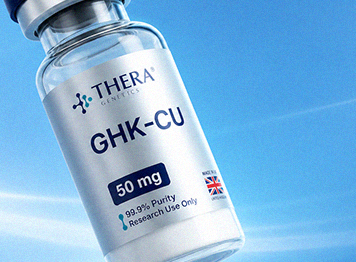
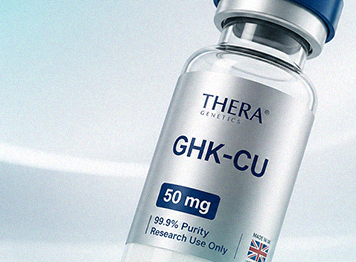
GHK-Cu is a naturally occurring copper-binding peptide complex that has been extensively investigated in the context of skin biology.
Research has associated GHK-Cu with processes related to extracellular matrix organization, collagen metabolism, tissue remodeling, and cellular repair.
More recent experimental research has also expanded interest in GHK-Cu beyond skin, investigating its possible relationship with mitochondrial function, oxidative stress, and mechanisms associated with healthy aging.
These findings add another dimension to the study of peptides: their potential role in understanding aging as a systemic biological process rather than simply an external appearance.
What About TB-500 and BPC-157?
TB-500 and BPC-157 have also attracted attention in regenerative and tissue-repair research.
However, their evidence base is still predominantly experimental and preclinical. Studies have investigated their potential relationship with tissue repair, cellular signaling, vascular processes, and recovery mechanisms, but experimental findings should not be interpreted as proof of clinical efficacy or safety in humans.
This distinction is essential.
The future of peptide science depends not only on discovering new molecules, but also on understanding exactly what the evidence demonstrates — and what remains to be investigated.
Aging Is More Than What We See in the Mirror
Wrinkles, loss of firmness, and changes in skin density are visible manifestations of a much broader biological process.
Behind the appearance of aging are changes in cellular communication, extracellular matrix organization, collagen dynamics, oxidative balance, and tissue regeneration.
Understanding these mechanisms allows science to look at aging from a different perspective: not simply as something to conceal, but as a biological process to understand.
The New Frontier: Structural Prevention
Prevention begins long before visible changes become pronounced.
The growing interest in peptides reflects a broader movement in longevity science: understanding the mechanisms that maintain tissue integrity, cellular function, and biological resilience over time.
Beauty science is increasingly intersecting with cellular biology.
And the more we understand these mechanisms, the more precisely we can define the future of healthy aging.
Beauty Begins Before Appearance
The future of skin science may not be defined by how much we can change its appearance, but by how deeply we understand the biology that sustains it.
Aging is inevitable.
Understanding the mechanisms behind aging is a choice science can make.
THERA Genetics
Science that delivers.
Applied excellence that transforms possibilities into reality.
Informational and educational content. It does not constitute medical advice, diagnosis, or prescription. The use of any substance or intervention should be evaluated by a qualified healthcare professional, taking into account the individual context and the available scientific evidence.
Peptídeos da Beleza: Quando o Envelhecimento Começa na Comunicação Celular
A pele não envelhece simplesmente por falta de produtos.
Ela envelhece porque, com o tempo, sua capacidade de produzir, reparar, renovar e se comunicar também muda.
A produção de colágeno diminui. A matriz extracelular sofre alterações. A renovação celular se torna mais lenta. A capacidade de responder a diferentes formas de estresse diminui.
O envelhecimento da pele, portanto, não é apenas uma questão estética.
É um processo biológico.
E é justamente nesse território que os peptídeos vêm despertando interesse na pesquisa científica.
A pele é um sistema de comunicação
Para permanecer funcional, a pele depende de uma complexa rede de comunicação entre células, proteínas estruturais, fatores de crescimento e moléculas sinalizadoras.
Fibroblastos, queratinócitos e outras células da pele estão constantemente recebendo e transmitindo sinais que ajudam a coordenar processos como síntese de matriz extracelular, remodelamento tecidual e reparação.
Com o envelhecimento, essa comunicação pode se tornar menos eficiente.
O resultado é conhecido: redução da densidade e elasticidade, alterações na organização da matriz extracelular, recuperação mais lenta e maior vulnerabilidade aos fatores ambientais.
É por isso que a ciência dos peptídeos é tão interessante.
Em vez de simplesmente mascarar a aparência da pele, algumas dessas moléculas são estudadas por sua capacidade de interagir com vias celulares e mecanismos biológicos específicos.
O que são peptídeos?
Peptídeos são pequenas cadeias de aminoácidos que desempenham diferentes funções no organismo.
Dependendo de sua estrutura e sequência, podem atuar como moléculas sinalizadoras e participar de processos relacionados ao metabolismo, reparação, inflamação e comunicação celular.
Na dermatologia e na ciência cosmética, diferentes peptídeos vêm sendo investigados por sua capacidade de influenciar mecanismos associados à matriz extracelular e à aparência da pele.
Mas o conceito é maior do que uma simples categoria de skincare.
Peptídeos são ferramentas de sinalização biológica.
E essa característica explica por que eles despertam interesse em pesquisas que vão muito além da estética.
GHK-Cu: comunicação, matriz e regeneração
Entre os peptídeos mais conhecidos nesse contexto está o GHK-Cu, um complexo formado pelo tripeptídeo GHK e pelo cobre.
O GHK-Cu possui uma longa história de investigação relacionada à biologia da pele, incluindo processos associados à síntese de componentes da matriz extracelular, remodelamento tecidual e resposta regenerativa.
Estudos experimentais e trabalhos relacionados à dermatologia sugerem que o complexo pode influenciar diferentes processos celulares envolvidos na manutenção da estrutura cutânea.
Mais recentemente, pesquisas também começaram a investigar o GHK-Cu sob uma perspectiva mais ampla, incluindo mecanismos relacionados à função mitocondrial, estresse oxidativo e longevidade.
Isso amplia a pergunta.
Talvez o interesse pelo GHK-Cu não esteja apenas em como a pele aparenta, mas em como determinados processos celulares relacionados à sua integridade podem ser modulados.
E o TB-500 e o BPC-157?
Outros peptídeos frequentemente associados à pesquisa sobre reparação tecidual são o TB-500 e o BPC-157.
O TB-500 está relacionado à timosina beta-4, uma proteína envolvida em processos celulares associados à migração celular, angiogênese e reparação tecidual. Grande parte da pesquisa disponível sobre esses mecanismos é experimental.
O BPC-157 também vem sendo investigado em modelos pré-clínicos por possíveis efeitos relacionados à reparação de tecidos, angiogênese e modulação de processos inflamatórios.
É importante, porém, separar pesquisa experimental de aplicação clínica.
Os mecanismos observados em modelos celulares ou animais não significam automaticamente que um peptídeo tenha eficácia ou segurança comprovadas para tratar ou prevenir o envelhecimento da pele em seres humanos.
Essa distinção é fundamental para uma ciência baseada em evidências.
Envelhecimento não é apenas o que aparece no espelho
Rugas são uma consequência visível de um processo muito maior.
Antes de uma alteração se tornar perceptível, inúmeras mudanças já podem estar acontecendo em níveis celulares e estruturais.
A matriz extracelular pode sofrer remodelamento. A produção de colágeno pode diminuir. A comunicação entre células pode se alterar. A capacidade de regeneração pode ser reduzida.
Por isso, falar sobre longevidade da pele é falar sobre preservação estrutural e função celular.
A estética é apenas a parte que conseguimos enxergar.
A nova fronteira: prevenção estrutural
A ciência do envelhecimento está gradualmente mudando a maneira como pensamos sobre prevenção.
Em vez de esperar que alterações se tornem visíveis para então tentar corrigi-las, a pesquisa busca compreender os mecanismos que antecedem essas mudanças.
No caso da pele, isso significa estudar:
- comunicação celular;
- matriz extracelular;
- produção e organização de colágeno;
- estresse oxidativo;
- função mitocondrial;
- inflamação;
- capacidade regenerativa;
- resposta aos danos ambientais.
Os peptídeos entram nessa conversa porque podem atuar como sinalizadores dentro de sistemas biológicos complexos.
Não se trata simplesmente de preencher, esticar ou esconder.
Trata-se de compreender a biologia que sustenta a estrutura.
A beleza começa antes da aparência
O futuro da ciência da pele pode estar menos relacionado à ideia de corrigir o que já aconteceu e mais à compreensão de como preservar a função celular antes que as alterações se tornem evidentes.
Essa perspectiva aproxima estética, biotecnologia e longevidade.
E coloca os peptídeos no centro de uma pergunta maior:
Como podemos compreender e preservar os mecanismos biológicos que mantêm a pele funcional ao longo do tempo?
Ainda existem muitas perguntas sem resposta.
E é exatamente por isso que a pesquisa continua avançando.
Porque envelhecer é inevitável.
Entender os mecanismos do envelhecimento é uma escolha da ciência.
THERA Genetics
Ciência que entrega.
Excelência aplicada que transforma possibilidades em realidade.
Conteúdo informativo e educacional. Não constitui recomendação médica, diagnóstico ou prescrição. A utilização de qualquer substância ou intervenção deve ser avaliada por um profissional de saúde habilitado, considerando o contexto individual e as evidências científicas disponíveis.