Two different mechanisms of action, a new generation of metabolic research, and an important question: what can science actually tell us so far?
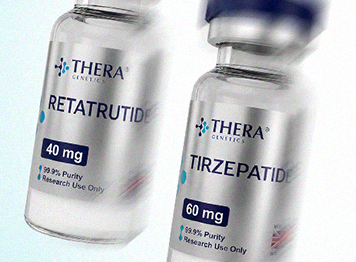
In recent years, advances in research into medications targeting metabolic health and weight management have gained significant attention. Among the molecules generating scientific interest are tirzepatide and retatrutide, two compounds that act on hormonal receptors involved in metabolism, appetite, and glucose regulation.
With different mechanisms of action and distinct stages of clinical development, both represent important avenues of investigation in the metabolic field.
But is retatrutide simply a more powerful version of tirzepatide? Answering this question requires understanding how each molecule works and, most importantly, what clinical studies allow us to conclude so far.
Tirzepatide: Acting on Two Hormonal Receptors
Tirzepatide is known as a dual agonist because it simultaneously acts on two hormonal receptors:
- GIP (glucose-dependent insulinotropic polypeptide): a hormone involved in regulating insulin secretion and other metabolic processes.
- GLP-1 (glucagon-like peptide-1): a hormone that plays a role in glucose regulation, appetite, and food intake.
The activation of these two receptors influences several physiological processes, including glucose-dependent insulin secretion, glucagon regulation, gastric emptying, and mechanisms associated with satiety.
Tirzepatide already has regulatory approval for specific indications in different countries. In the United States, for example, it is marketed as Mounjaro for type 2 diabetes and as Zepbound for chronic weight management in adults who meet the established criteria.
Its use requires individual assessment, medical prescription, and supervision.
Retatrutide: The Approach of a Triple Agonist
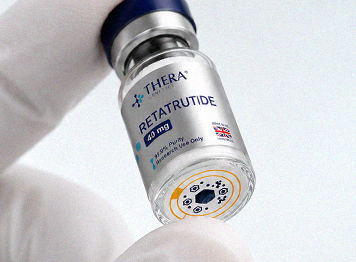
Retatrutide, also known by its development code LY3437943, represents a different approach.
While tirzepatide acts on GIP and GLP-1 receptors, retatrutide adds a third target: the glucagon receptor.
For this reason, it is classified as a triple agonist.
Its action involves three hormonal pathways:
- GIP: contributes to the regulation of insulin secretion and energy metabolism.
- GLP-1: is associated with satiety, food intake, and glycemic control.
- Glucagon: plays a role in glucose regulation and processes related to energy metabolism.
The inclusion of the glucagon receptor expands research into how different hormonal pathways may work together to influence metabolism.
This combination is one of the aspects that makes retatrutide particularly interesting from a scientific research perspective.
However, a broader mechanism of action does not, by itself, mean that one molecule is superior to another in terms of efficacy, safety, or suitability for every individual.
What Have Clinical Studies Demonstrated So Far?
Retatrutide has advanced into Phase 3 clinical trials, the stage at which a molecule is evaluated in larger groups of participants to further assess its efficacy and safety.
In July 2026, Eli Lilly announced positive results from two important studies within the TRIUMPH program: TRIUMPH-2 and TRIUMPH-3.
In TRIUMPH-2, conducted among adults with obesity or overweight associated with type 2 diabetes, participants experienced average weight reductions of up to 20.8% after 80 weeks, based on the highest dose studied and the analysis reported by the company.
In TRIUMPH-3, which involved adults with severe obesity and established cardiovascular disease, with or without type 2 diabetes, the average reduction reached 22.6% after 80 weeks, also at the highest dose.
These results expanded the body of evidence regarding the molecule’s potential and its possible future role in cardiometabolic care.
It is important to emphasize that these figures correspond to specific populations, protocols, and experimental conditions. They should not be interpreted as a prediction of individual results.
Why Can’t We Directly Compare Weight Loss Percentages?
One of the most common comparisons in discussions about these molecules involves the weight reduction percentages reported in clinical studies.
However, there is an important methodological consideration: results obtained from different studies should not be interpreted as though they were a direct comparison between medications.
Studies may differ in:
- Participant profiles and characteristics.
- Inclusion and exclusion criteria.
- Doses used and dose-escalation protocols.
- Treatment duration.
- Methods of data analysis.
- Associated health conditions.
These variables influence how the data should be interpreted.
To better understand the differences between two molecules, direct comparative studies, also known as head-to-head trials, are particularly relevant.
One example is TRIUMPH-5, a Phase 3 study designed to compare retatrutide and tirzepatide in adults with obesity.
This type of research allows both molecules to be evaluated within the same protocol, providing more consistent information for scientific comparison.
However, results must be published and analyzed before any conclusions about superiority can be drawn.
What About Safety and Adverse Effects?
Evaluating a molecule involves more than looking at its efficacy results.
Safety is an essential component of clinical development and requires ongoing investigation, including the frequency of adverse events, tolerability, potential risks, and outcomes across different patient profiles.
In the case of tirzepatide, its safety profile has already been evaluated in several clinical studies and is described in its official prescribing information.
For retatrutide, Phase 3 studies remain essential to expanding our understanding of its safety over longer periods and across different populations.
Therefore, it is not appropriate to assume that the findings for one molecule can automatically be applied to the other, even when they share some mechanisms of action.
More Than Molecules: An Evolution in Understanding Metabolism
The comparison between tirzepatide and retatrutide shows how science is advancing in the investigation of different hormonal pathways involved in metabolic health.
Research into dual and triple agonists expands our understanding of the interactions between appetite, blood glucose, energy metabolism, and body composition.
But scientific innovation requires more than impressive results. It requires consistent evidence, safety assessment, long-term follow-up, and regulatory approval.
At THERA Genetics, we believe that following scientific advances also means understanding their limitations, interpreting data responsibly, and distinguishing scientific evidence from expectations.
The future of metabolic health lies in the integration of science, precision, and knowledge.
THERA Genetics
Science that delivers.
Applied excellence that transforms possibilities into reality.
Informational and educational content. It does not constitute medical advice, diagnosis, or prescription. The use of any substance or intervention should be evaluated by a qualified healthcare professional, taking into account the individual context and the available scientific evidence.
Retatrutida ou tirzepatida: o que realmente muda entre as duas moléculas?
Dois mecanismos de ação diferentes, uma nova geração de pesquisas metabólicas e uma pergunta importante: o que a ciência já consegue responder?
Nos últimos anos, os avanços na pesquisa de medicamentos voltados à saúde metabólica e ao controle do peso ganharam destaque. Entre as moléculas que despertam interesse científico estão a tirzepatida e a retatrutida, duas substâncias que atuam em receptores hormonais relacionados ao metabolismo, ao apetite e à regulação da glicose.
Com mecanismos de ação diferentes e estágios distintos de desenvolvimento clínico, ambas representam caminhos importantes de investigação na área metabólica.
Mas afinal, a retatrutida é uma versão mais potente da tirzepatida? A resposta exige compreender como cada molécula funciona e, principalmente, o que os estudos clínicos permitem concluir até agora.
Tirzepatida: a atuação em dois receptores hormonais
A tirzepatida é uma molécula conhecida como agonista duplo, pois atua simultaneamente em dois receptores hormonais:
- GIP (polipeptídeo insulinotrópico dependente de glicose): hormônio envolvido na regulação da secreção de insulina e em outros processos metabólicos.
- GLP-1 (peptídeo semelhante ao glucagon tipo 1): hormônio que participa da regulação da glicose, do apetite e da ingestão alimentar.
A ativação desses dois receptores influencia diferentes processos fisiológicos, incluindo a secreção de insulina dependente da glicose, a regulação do glucagon, o esvaziamento gástrico e os mecanismos relacionados à saciedade.
A tirzepatida já possui aprovação regulatória para indicações específicas em diferentes países. Nos Estados Unidos, por exemplo, é comercializada como Mounjaro para diabetes tipo 2 e como Zepbound para controle crônico do peso em adultos que atendem aos critérios estabelecidos.
Sua utilização exige avaliação individual, prescrição e acompanhamento médico.
Retatrutida: a proposta de um agonista triplo
A retatrutida, também conhecida pelo código de desenvolvimento LY3437943, representa uma abordagem diferente.
Enquanto a tirzepatida atua nos receptores GIP e GLP-1, a retatrutida acrescenta um terceiro alvo: o receptor de glucagon.
Por isso, é classificada como um agonista triplo.
Sua ação envolve três vias hormonais:
- GIP: participa da regulação da secreção de insulina e do metabolismo energético.
- GLP-1: está relacionado à saciedade, à ingestão alimentar e ao controle glicêmico.
- Glucagon: participa da regulação da glicose e de processos relacionados ao metabolismo energético.
A inclusão do receptor de glucagon amplia a investigação sobre como diferentes vias hormonais podem atuar de maneira integrada no metabolismo.
Essa combinação é um dos aspectos que tornam a retatrutida especialmente interessante para a pesquisa científica.
Entretanto, um mecanismo de ação mais amplo não significa, por si só, que uma molécula seja superior à outra em eficácia, segurança ou adequação clínica.
O que os estudos clínicos já demonstraram?
A retatrutida avançou para os estudos de fase 3, etapa em que uma molécula é avaliada em grupos maiores de participantes, com o objetivo de ampliar a compreensão sobre sua eficácia e segurança.
Em julho de 2026, a Eli Lilly anunciou resultados positivos de dois estudos importantes do programa TRIUMPH: TRIUMPH-2 e TRIUMPH-3.
No TRIUMPH-2, realizado com adultos com obesidade ou sobrepeso associado ao diabetes tipo 2, os participantes apresentaram reduções médias de peso de até 20,8% após 80 semanas, considerando a dose mais elevada estudada e a análise apresentada pela empresa.
No TRIUMPH-3, que envolveu adultos com obesidade grave e doença cardiovascular estabelecida, com ou sem diabetes tipo 2, a redução média chegou a 22,6% após 80 semanas, também na dose mais elevada.
Esses resultados ampliaram o conjunto de evidências sobre o potencial da molécula e seu possível papel futuro no cuidado cardiometabólico.
É importante destacar que os números apresentados correspondem a populações específicas, protocolos e condições experimentais. Eles não representam uma previsão de resultado individual.
Por que não podemos comparar diretamente os percentuais de perda de peso?
Uma das comparações mais frequentes nas discussões sobre essas moléculas envolve os percentuais de redução de peso apresentados nos estudos clínicos.
Entretanto, existe uma questão metodológica importante: resultados obtidos em pesquisas diferentes não devem ser interpretados como se fossem uma comparação direta entre os medicamentos.
Os estudos podem apresentar diferenças em:
- Perfil clínico e características dos participantes.
- Critérios de inclusão e exclusão.
- Doses utilizadas e protocolos de escalonamento.
- Duração do tratamento.
- Métodos de análise dos resultados.
- Condições de saúde associadas.
Essas variáveis influenciam a interpretação dos dados.
Para entender melhor as diferenças entre duas moléculas, os estudos comparativos diretos, também chamados de head-to-head, são especialmente relevantes.
Um exemplo é o TRIUMPH-5, estudo de fase 3 desenvolvido para comparar retatrutida e tirzepatida em adultos com obesidade.
Esse tipo de pesquisa permite avaliar as duas moléculas dentro de um mesmo protocolo, oferecendo informações mais consistentes para uma comparação científica.
Seus resultados, entretanto, precisam ser publicados e analisados antes de qualquer conclusão sobre superioridade.
E quanto à segurança e aos efeitos adversos?
A avaliação de uma molécula não pode considerar apenas seus resultados de eficácia.
A segurança é um componente essencial do desenvolvimento clínico e exige investigação contínua, incluindo a frequência de efeitos adversos, a tolerabilidade, os possíveis riscos e os resultados em diferentes perfis de pacientes.
No caso da tirzepatida, seu perfil de segurança já foi avaliado em diferentes estudos clínicos e está descrito nas informações oficiais de prescrição.
Para a retatrutida, os estudos de fase 3 continuam sendo fundamentais para ampliar o conhecimento sobre sua segurança em períodos mais prolongados e em diferentes populações.
Por isso, não é adequado presumir que os resultados de uma molécula possam ser automaticamente aplicados à outra, mesmo que compartilhem alguns mecanismos de ação.
Mais do que moléculas, uma evolução na compreensão do metabolismo
A comparação entre tirzepatida e retatrutida mostra como a ciência tem avançado na investigação das diferentes vias hormonais envolvidas na saúde metabólica.
O estudo de agonistas duplos e triplos amplia as possibilidades de compreender a interação entre apetite, glicemia, metabolismo energético e composição corporal.
Mas inovação científica exige mais do que resultados expressivos. Exige evidências consistentes, avaliação de segurança, acompanhamento de longo prazo e aprovação regulatória.
Na THERA Genetics, acreditamos que acompanhar os avanços da ciência também significa compreender seus limites, interpretar os dados com responsabilidade e separar evidência científica de expectativas.
O futuro da saúde metabólica está na integração entre ciência, precisão e conhecimento.
THERA Genetics
Ciência que entrega.
Excelência aplicada que transforma possibilidades em realidade.
Conteúdo informativo e educacional. Não constitui recomendação médica, diagnóstico ou prescrição. A utilização de qualquer substância ou intervenção deve ser avaliada por um profissional de saúde habilitado, considerando o contexto individual e as evidências científicas disponíveis.